Eye Exams in Picayune
& Pearl River
A comprehensive eye exam is one of the most valuable things you can do for your long-term health, and not just your eye health. Your eyes can reveal early signs of conditions like diabetes, high blood pressure, and autoimmune disease, often before other symptoms appear.
At Advanced Eyecare, we provide comprehensive eye exams in Picayune and Pearl River with an emphasis on thoroughness and an unhurried patient experience. Our eye doctors combine advanced diagnostic technology with personalized care to ensure each exam is as detailed and informative as possible.
Why are annual eye exams important?
Most people schedule an eye exam when their vision changes or they need new contacts, but a comprehensive exam covers far more than a vision check. Our eye doctors evaluate your eye health, screening for conditions like glaucoma, macular degeneration, cataracts, and diabetic retinopathy that frequently develop without any noticeable symptoms in the early stages.
Many of the most serious eye diseases cause no pain and no obvious vision changes until significant, irreversible damage has already occurred. Regular exams are the most reliable way to catch these conditions early when treatment options are most effective.
A comprehensive exam also gives us the chance to evaluate how your vision is functioning every day and review your current eyewear. Additionally, we can discuss how factors like screen time, medications, or underlying health conditions may impact your visual comfort and clarity.
What to expect during your eye exam
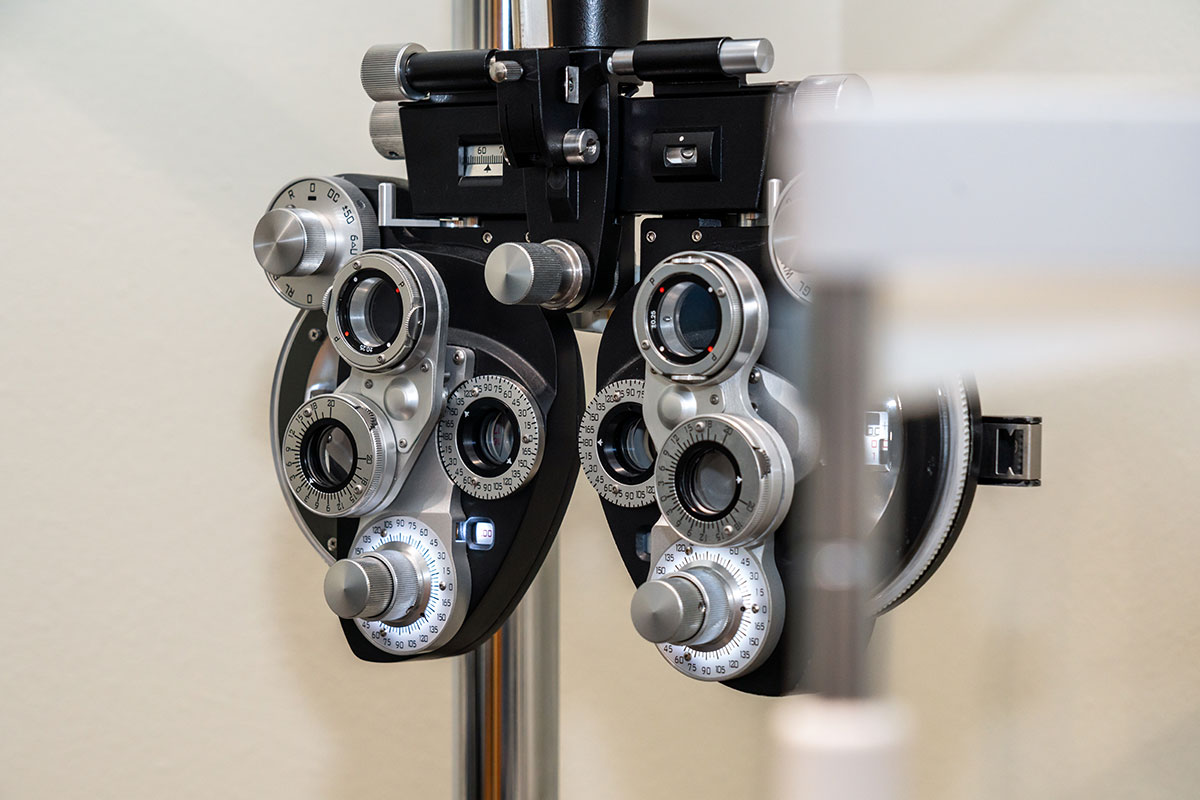
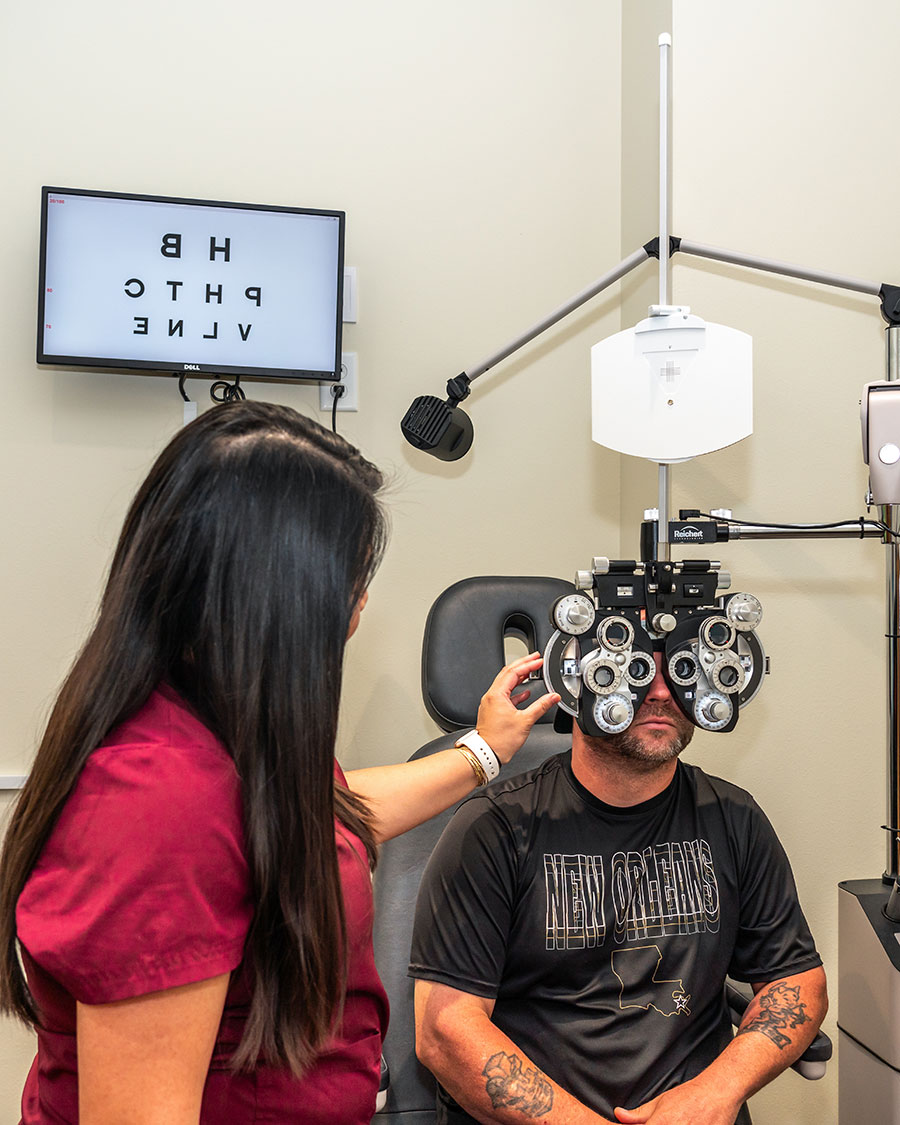
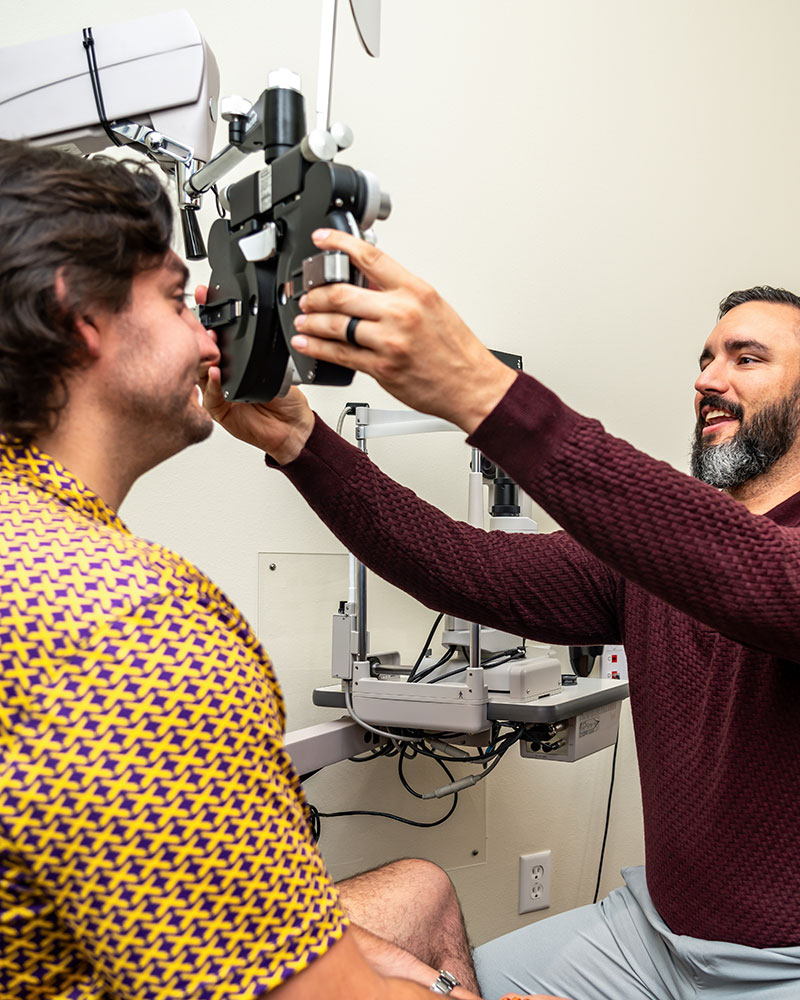
Our comprehensive eye exams are thorough, efficient, and tailored to your age, health history, and individual needs. Here's what a typical visit includes:
- A detailed evaluation of your eye structure and function
- An eye pressure check for glaucoma
- Visual field testing with the VR Heru headset to assess peripheral vision and detect early signs of glaucoma and other visual field disorders
- Digital retinal imaging and optical coherence tomography (OCT): advanced imaging tools that allow our optometrists to examine the layers of the retina in detail, enabling early detection and ongoing monitoring of conditions like macular degeneration, diabetic retinopathy, and glaucoma
- An assessment of how your eyes work together (binocular vision)
- A review of your vision needs for eyeglasses or contact lenses
- A personalized contact lens exam if you wear or are considering lenses
- A discussion of lifestyle factors affecting your vision, including computer use
How often should you get an eye exam?
The right frequency depends on your age, vision needs, and risk factors. The American Optometric Association (AOA) recommends the following exam schedule¹:
- Ages 18 to 39: At least every two years for healthy adults with no significant risk factors. Annually if you wear glasses or contacts, have a family history of eye disease, or manage a condition like diabetes.
- Ages 40 to 64: Every two years for low-risk patients, though annually is advisable if you have risk factors or use vision correction. This is also the age range when glaucoma and macular degeneration become more prevalent.
- Age 65 and older: Annual exams are recommended for everyone in this age group. Age-related eye conditions become significantly more common at this point, and so much can change from one year to the next.
Remember, these are general guidelines; your eye doctor may recommend a different schedule based on your specific situation.
Signs you may need an eye exam
While annual eye exams are generally sufficient, certain symptoms should be evaluated without waiting for your next scheduled visit:
- Blurry or double vision
- Frequent headaches or eye strain, especially after screen use
- Difficulty seeing in low light or at night
- Fluctuating vision or a noticeable change in your prescription
- Eye pain, redness, or persistent dryness
- Sudden onset of floaters, flashes of light, or a shadow in your vision
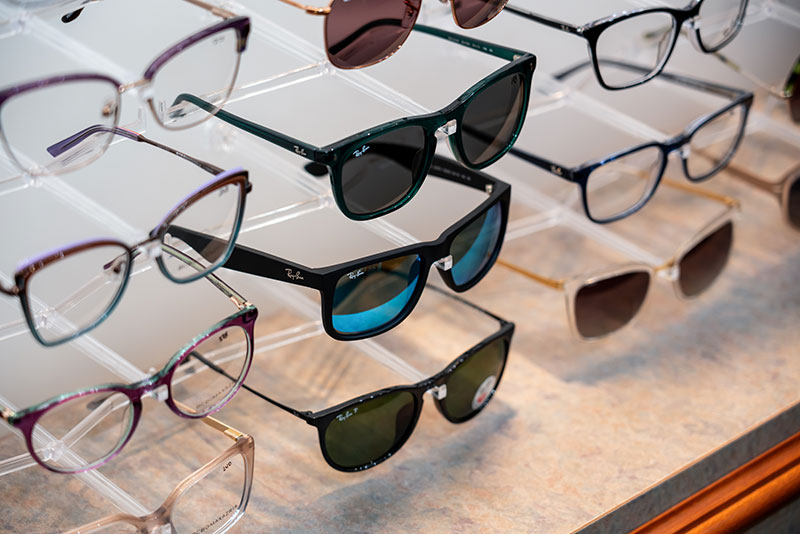
Browse frames before your appointment
Before your appointment, take a few minutes to browse our online frame gallery. Explore styles and brands ahead of time, so you're ready to find the perfect pair once your exam is done.
Schedule your comprehensive eye exam today
At Advanced Eyecare, we serve patients of all ages throughout Picayune, Pearl River, Slidell, Bogalusa, Nicholson, and the surrounding communities. Whether it's time for your annual exam or something about your vision just doesn't feel right, our eye doctors have the technology and the expertise to give you a thorough, clear picture of your eye health.
References:
Eye exam FAQ
How long does a comprehensive eye exam take?
Most comprehensive eye exams at Advanced Eyecare take about an hour and a half. If you're being seen for the first time, need a contact lens fitting, or require additional testing, plan for a little extra time. We'd rather take the time to be thorough than rush through something as important as your eye health.
To help you feel prepared for your visit, we also encourage you to visit our What to Know Before Your Eye Exam page for helpful information about what to expect during your appointment.
Can an eye exam detect health conditions?
It can, and that often surprises patients. The eyes are the only place in the body where blood vessels and nerve tissue can be examined directly and non-invasively. During a comprehensive exam, our optometrists can detect early signs of conditions such as diabetes, high blood pressure, high cholesterol, and certain autoimmune diseases, sometimes before a patient has received a diagnosis elsewhere.
What is the difference between a vision screening and a comprehensive eye exam?
A vision screening, like the kind performed at a school or workplace, checks basic visual acuity and can detect obvious vision problems. A comprehensive eye exam is a much more thorough evaluation that assesses the health of your eyes, screens for disease, evaluates how your eyes work together, and examines structures like the retina and optic nerve. Screenings are a useful starting point, but they are not a substitute for a comprehensive exam.